
Polycarbonate vs Colorbond patio roof: light, heat and cost compared
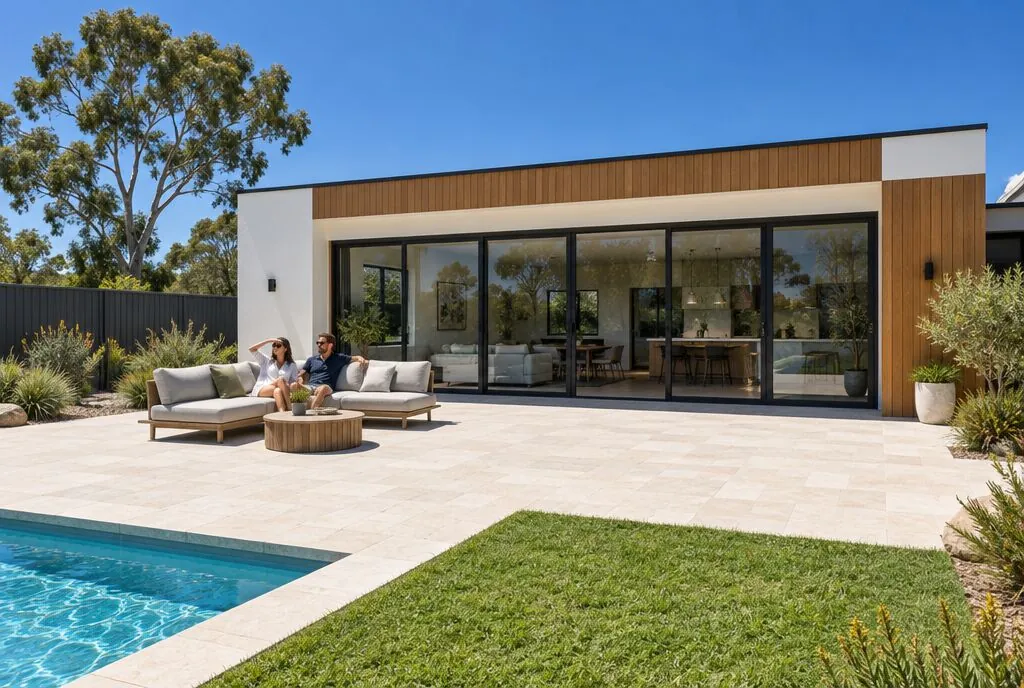
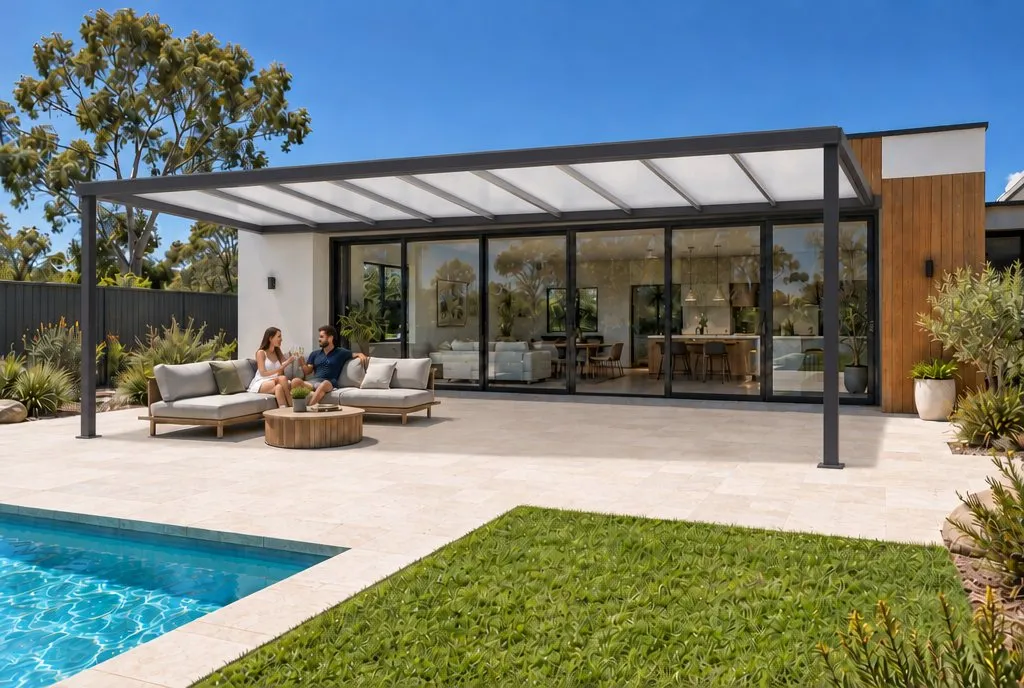 BeforePolycarbonate Roof Patio
In the polycarbonate vs Colorbond patio roof choice, Colorbond steel gives full shade, cooler air underneath and a long track record. Polycarbonate lets daylight through and is usually a little cheaper. In most of Australia, Colorbond is the better all round roof, and polycarbonate works best in small doses or in shaded, cooler spots.
Many homeowners end up with a mix: Colorbond over most of the patio and a few clear or tinted sheets near the house. Here is how the two compare in 2026.
Polycarbonate vs Colorbond at a glance
| Polycarbonate | Colorbond steel | |
|---|---|---|
| Light | Clear sheets let most daylight through; tints and opals much less | Blocks all light |
| Heat underneath | Sun passes through clear and light sheets | Full shade; cooler with light colours or insulation |
| Rain cover | Yes | Yes |
| UV | Sheets have a UV protected face | Not relevant, steel blocks UV |
| Typical warranty | Often around 10 years on light transmission (brand dependent) | Varies with site and use, ask your installer |
| Upkeep | Shows leaves and dirt from below | Hose unwashed areas every six months |
| Indicative price, 6 m × 4.5 m, Perth | $10,500 to $12,500 | $11,500 to $13,500 |
Prices are indicative installed ranges, rounded and including GST. An installer's site measure and quote set the real price.
How much light does polycarbonate let through?
It depends on the tint. Palram lists these light transmission figures for its Suntuf corrugated sheets:
| Sheet colour | Light transmission |
|---|---|
| Clear | 87% |
| White Diffused | 85% |
| White Opal | 45% |
| Solar Ice | 25% |
So a clear sheet lets almost all the light through, while a heat reflective tint lets through about a quarter. Stratco's Laserlite range adds bronze, grey and cream tints, plus premium shades.
The heat problem with a clear patio roof
A clear patio roof looks bright and open. But light and heat travel together, and the patio below can become a glasshouse in summer.
The Australian Government's YourHome guide puts it plainly. Roof glazing receives almost twice as much heat as an unprotected west facing window of the same size. That is a big load in Perth, Adelaide or Brisbane.
NSW BASIX rules point the same way. For polycarbonate to count as a shading device, it needs a shading coefficient below 0.35, and clear sheeting generally does not meet that. A tinted sheet is usually needed.
Tinted and heat reflective sheets help a lot. Palram recommends its SolarSmart tints to reduce heat build up. But even a tinted sheet stays warmer underneath than solid steel.
Colorbond: shade and heat control
A Colorbond patio roof blocks the sun completely. The steel itself still heats up, so colour matters.
BlueScope says most core Colorbond colours use Thermatech solar reflectance technology, and 11 cool colours have a solar absorptance of 0.45 or lower. A pale colour reflects much more heat than a dark one.
For the coolest result, go one step further with an insulated roof panel. Read our insulated vs non-insulated patio guide for the details.
The trade off is light. A wide solid roof can darken the rooms behind it. Lysaght offers double sided roofing with a gloss underside to bounce more light, which can reduce the need for translucent sheets.
Durability, hail and warranties
Polycarbonate
Quality polycarbonate sheets have a UV protected layer that stops yellowing and brittleness. Palram stresses that the marked UV side must face outwards.
Palram lists its sheets as hail and impact resistant and gives a 10-year warranty against loss of light transmission. Stratco says Laserlite's Weatherguard technology is warranted to resist 25% larger hailstones. Grades differ a lot, so ask which sheet you are getting.
Colorbond
BlueScope warranties depend on where and how the steel is used. Its longest roofing warranty covers up to 36 years against corrosion perforation. It only applies to fully lined or enclosed roofs more than 5 km from salt water.
An open patio is not a lined house roof, so different terms apply. Ask your installer what warranty covers the steel on your patio. Near the coast, Colorbond Ultra is the grade made for harsh marine sites.
Maintenance
BlueScope recommends hosing Colorbond areas that rain does not wash at least every six months, and more often near salt spray. On a patio, that includes the underside and the gutters.
Polycarbonate needs similar care, with a soft brush and water. Leaves and dirt show from below on clear sheets, so they need cleaning more often to look good.
Cost: polycarbonate vs Colorbond in 2026
Here are indicative installed prices for a 6 m × 4.5 m attached patio.
| Style | WA | VIC | QLD | NSW |
|---|---|---|---|---|
| Polycarbonate Roof Patio | $10,500 to $12,500 | $11,000 to $13,000 | $11,500 to $13,500 | $12,500 to $14,500 |
| Flat Roof Colorbond Patio | $11,500 to $13,500 | $12,500 to $14,500 | $12,500 to $15,000 | $13,500 to $16,000 |
| Insulated Roof Patio | $15,000 to $17,500 | $15,500 to $18,500 | $16,000 to $19,000 | $17,000 to $20,000 |
The saving with polycarbonate is small, because the frame, footings and labour are the same. See the full patio cost guide for other styles.
Which one should you choose?
- West or north facing yard in a hot city: Colorbond, ideally insulated. A clear roof will be too hot on summer afternoons.
- Patio in front of a dark living room: Colorbond with a few clear or opal sheets near the house wall.
- South facing courtyard in Melbourne or Hobart: polycarbonate in a light tint can work well, keeping the space and the house bright.
- Covered walkway, clothesline or plant area: polycarbonate, since daylight matters more than comfort.
- Coastal home: Colorbond in a marine grade, or polycarbonate on a well coated frame. Wash both regularly.
- Lowest budget: the gap is small, so choose on comfort, not price.
Not sure how it will look? With Backyard Mate, our free tool, you can see a polycarbonate patio or a Colorbond one on your house in about 30 seconds.
Common questions
Is polycarbonate cheaper than Colorbond for a patio?
Usually only slightly. For a 6 m × 4.5 m patio in Perth, a Polycarbonate Roof Patio is indicatively $10,500 to $12,500 against $11,500 to $13,500 for a Flat Roof Colorbond Patio, because the frame and labour cost about the same.
Does a polycarbonate patio roof get hot?
It can. Clear sheets let most of the sun through, and the YourHome guide notes roof glazing takes in a lot of heat. Tinted or heat reflective sheets cut light and heat, but a solid or insulated roof stays cooler.
How long does a polycarbonate patio roof last?
It depends on the sheet grade, the UV protection and your climate. Palram, for example, gives a 10-year warranty against loss of light transmission on its Suntuf sheets, so ask what warranty your installer's sheet carries.
Can I mix polycarbonate and Colorbond on one patio?
Yes, and many people do. A few clear or tinted sheets near the house keep rooms bright, while Colorbond over the rest gives shade.
Which way up does polycarbonate go?
The UV protected side must face the sun. Makers mark that side, and fitting it upside down shortens the life of the sheet.
Keep reading
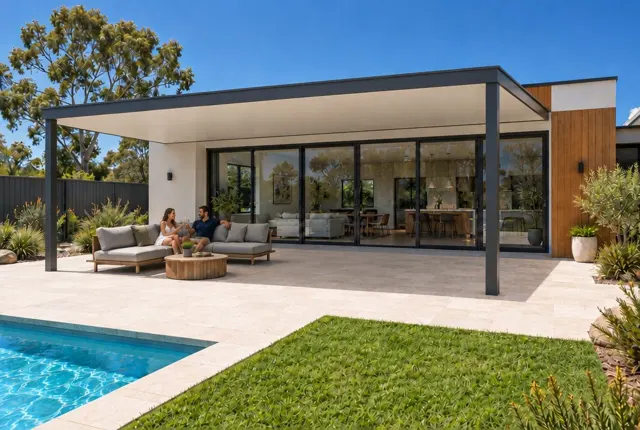
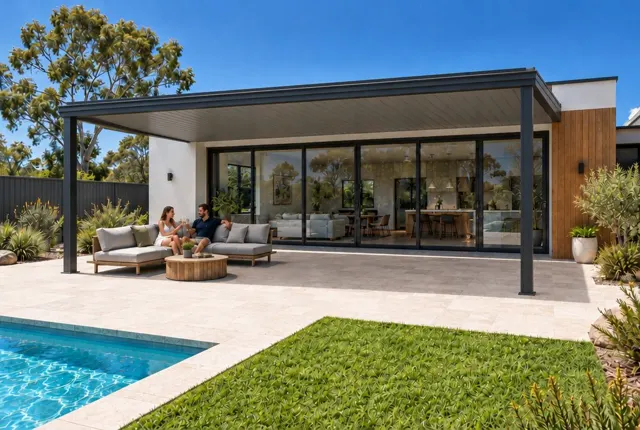
Sources
- Suntuf profiled polycarbonate sheet | Palram Australia
- Polycarbonate roofing | Stratco
- Why choose COLORBOND steel? | BlueScope (SteelSelect)
- Warranty: roofing made from COLORBOND steel and ZINCALUME steel | BlueScope
- Shading | YourHome (Australian Government)
- Shading projections (BASIX) | NSW Planning Portal
- How to maintain COLORBOND steel and ZINCALUME steel | BlueScope
- Patios, Pergolas & Verandahs | Lysaght
Prices on this page come from Backyard Mate's pricing for each state and are indicative only. Rules and products change: check with your council and installer before you build.