
Pergolas in Hobart: catch the sun, block the wind
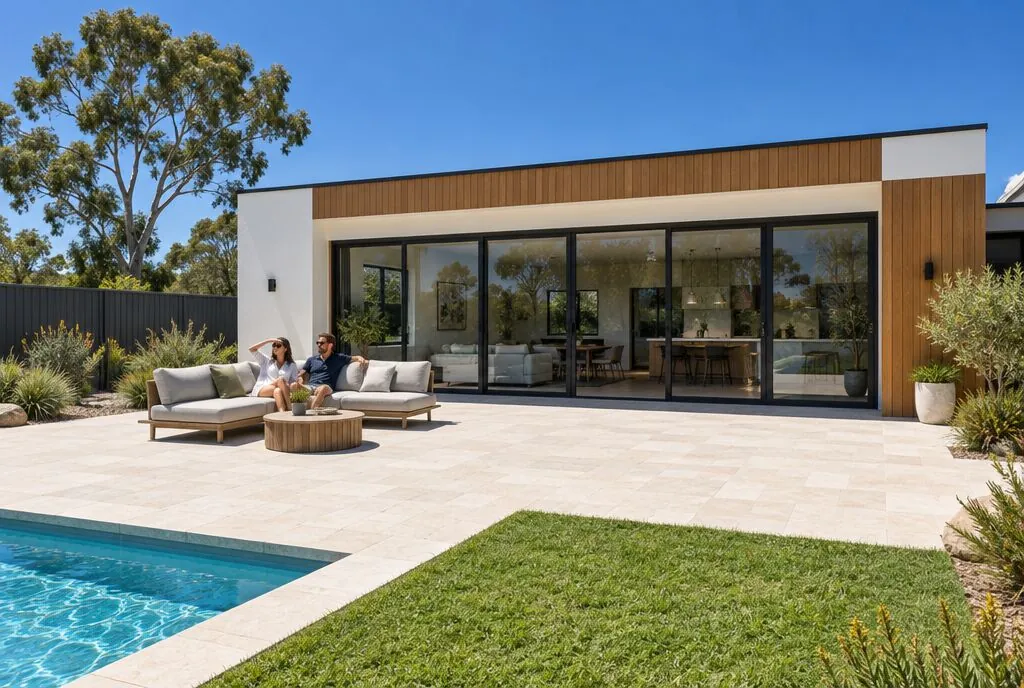
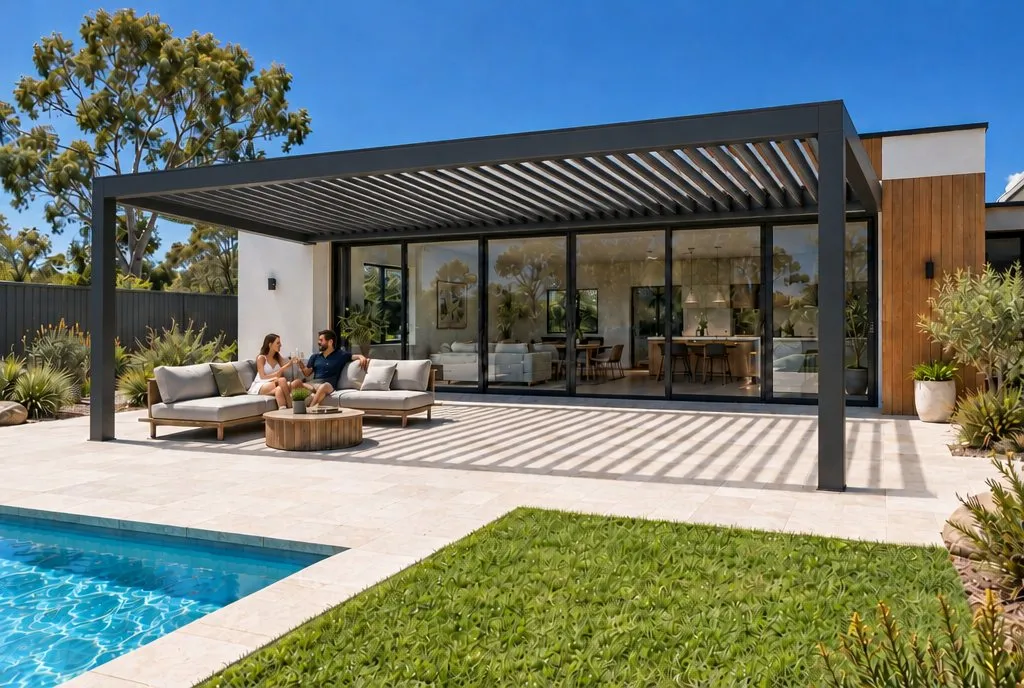 BeforeAdjustable Louvre Pergola
Pergolas in Hobart cost from about $10,500 to $12,500 for a 6 × 4.5 m open timber pergola to about $31,500 to $36,500 for an adjustable louvre roof. In Hobart, the best pergola is the one that lets the winter sun in.
Hobart people use "pergola" and "verandah" for both open frames and roofed structures. This page covers open and opening pergolas, plus a short note on roofed ones. For insulated and gable roofs, see our Hobart patios page.
What does a pergola cost in Hobart in 2026?
Here are indicative installed prices for the pergola styles in Tasmania, including GST.
| Style | 3 × 3 m | 5 × 4 m | 6 × 4.5 m |
|---|---|---|---|
| Adjustable Louvre Pergola | $15,000 to $17,500 | $23,000 to $27,000 | $31,500 to $36,500 |
| Open Timber Pergola | $7,000 to $8,500 | $8,000 to $9,000 | $10,500 to $12,500 |
| Fixed Aluminium Slat Pergola | $11,500 to $13,500 | $11,500 to $13,500 | $14,500 to $17,500 |
| Pyramid Roof Pavilion | $14,500 to $17,000 | $16,500 to $19,500 | $22,500 to $26,000 |
Indicative installed prices in Tasmania, including GST, rounded. Pavilion is freestanding, the others attached to the house. Updated 28 October 2026.
For a roofed pergola that still lets light through, a polycarbonate roof is about $12,000 to $14,000 for the same size. Tasmanian prices run higher than Perth or Adelaide. Sloping blocks, rocky ground and access on Hobart's hillsides can add to the footing work.
Hobart's climate: the sun is the scarce resource
Hobart is the coolest and cloudiest capital on this list. The Bureau of Meteorology's Ellerslie Road record goes back to 1882:
| Hobart, Ellerslie Road (BOM) | January | June | Year |
|---|---|---|---|
| Mean max temperature | 21.8 °C | 12.1 °C | 17.0 °C |
| Mean daily sunshine | 8.0 hours | 3.9 hours | 5.9 hours |
| Mean daily solar exposure | 22.6 MJ/m² | 4.9 MJ/m² | 13.3 MJ/m² |
| Mean 3pm wind speed | 19.0 km/h | 12.2 km/h | 16.1 km/h |
| Days with 1 mm of rain or more | 5.6 | 7.2 | 86.7 |
Hobart averages only 6.4 days a year of 30 °C or more, and just 40.8 clear days a year. June's solar energy is less than a quarter of January's.
So a Hobart pergola is not mainly about escaping heat. It is about sitting outside on a bright spring or autumn day, out of the breeze. It also must not block low winter sun from your living room.
Which pergola styles suit Hobart?
Adjustable louvre pergola
A louvre roof fits Hobart best. Open the blades fully from May to August to let 3.9 hours of winter sun reach the house. Close them for showers, which come on around 7 to 9 days a month through winter. It costs about $31,500 to $36,500.
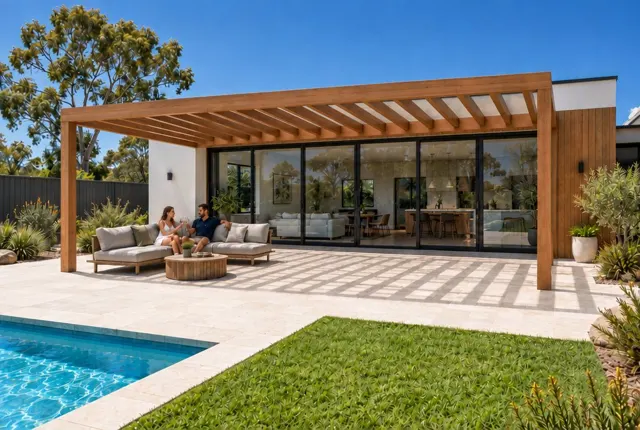
BeforeAdjustable Louvre PergolaOpen timber pergola
A timber pergola suits Hobart's older weatherboard and sandstone homes. Grow a deciduous vine for summer shade and bare winter branches. WoodSolutions rates H3 treated timber for outside, above-ground use; in-ground structural posts need H5 or a Class 1 durable hardwood.
Pergola with a clear or tinted roof
If you want rain cover without losing light, a polycarbonate roof keeps the space bright. It counts as a roofed structure, so see our patio vs pergola guide for the trade-offs.
Fixed aluminium slat pergola
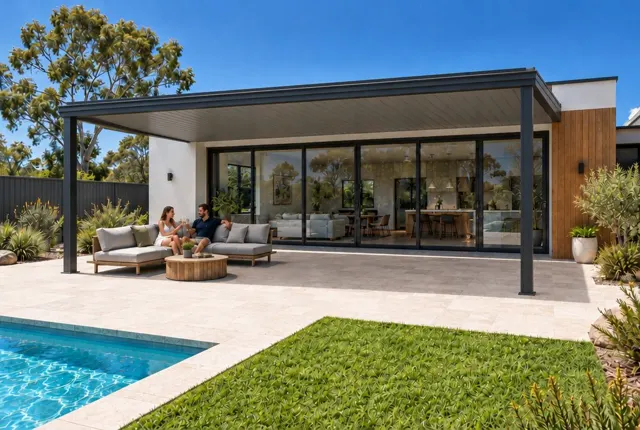
Slats work well on a west-facing deck that bakes on summer afternoons. Keep them away from north-facing windows, where they would cut precious winter sun.
Do you need approval for a pergola in Hobart?
Tasmania sorts building work into risk categories. Small, simple pergolas can be Category 1 low risk work, which needs no building permit.
Approval in Tasmania, in short
Tasmania sorts building work by risk. A pergola with no roof or only shade cloth, up to 36 m2 and 3.5 m high, is low risk and needs no building permit. A roofed porch or verandah is low risk up to 9 m2 for an owner, or up to 18 m2 if a licensed builder does it, with the floor under 1 m high. Bigger structures move to notifiable work (a building surveyor issues a Certificate of Likely Compliance) or permit work (council building permit). You still need a planning permit or written confirmation from council that one is not needed. Installers usually coordinate the building surveyor.
Read the Tasmania approval guide. Your installer usually handles the paperwork.
A low risk checklist used by Tasmanian councils, such as Meander Valley's, lists the conditions:
- Freestanding: not attached to the house.
- Size: no larger than 36 m².
- Height: no higher than 3.5 m from finished ground level.
- Roof: no roof, or a permeable cover such as shade cloth.
- Location: not within 2 m of an easement or other infrastructure, and not over an on-site wastewater system.
The checklist also notes that a planning permit or plumbing approval may still be needed. Where the work costs more than $20,000, state statutory fees and levies apply. An attached pergola or a solid roof moves you into a higher category. Our Tasmanian council approval guide covers the next steps.
Things specific to Hobart
- Wind: summer afternoons average around 19 km/h at Ellerslie Road, so a side screen or blind on the windward side makes a big difference.
- Bushfire areas: many suburbs climb into bushland. CBOS says separate building requirements apply in bushfire hazard areas, so check before choosing timber.
- Heritage streets: in older inner suburbs, ask council about heritage controls before you design anything visible from the street.
How Backyard Mate works in Hobart
We are not a builder and never install. Here is how it works:
- Upload a photo of your backyard and pick louvre, timber, slat or a roofed style.
- In about 30 seconds you see it on your own house, with an indicative Tasmanian price.
- If you want a quote, one local installer who services your area calls you. Only one.
Common questions
How much does a pergola cost in Hobart?
A 6 × 4.5 m open timber pergola in Hobart is about $10,500 to $12,500. Aluminium slats are about $14,500 to $17,500, and a louvre roof about $31,500 to $36,500. A pergola with a polycarbonate roof is about $12,000 to $14,000. All are indicative installed ranges.
Do I need a building permit for a pergola in Tasmania?
Not always. Council checklists, such as Meander Valley's, treat some pergolas as Category 1 low risk work. The pergola must be freestanding, up to 36 m² and 3.5 m high, with no roof or a permeable cover. A planning permit may still be needed.
What is the best pergola for Hobart's climate?
An adjustable louvre roof suits Hobart well, because you can open it fully to catch scarce winter sun and close it against rain. A timber pergola with a deciduous vine is the lower cost way to get the same effect.
Is an attached pergola low risk work in Tasmania?
The low risk checklist we reviewed covers freestanding pergolas only. An attached pergola, or one with a solid roof, generally goes through a building surveyor. Ask your installer which category your design falls into.
Does Hobart get enough sun for a pergola?
Hobart averages 8.0 hours of sunshine a day in January but only 3.9 hours in June, according to the Bureau of Meteorology. A pergola here should be designed to let winter sun in, not just block summer sun.
Keep reading
Sources
- Climate statistics for Australian locations: Hobart (Ellerslie Road) | Bureau of Meteorology
- Category 1 Low Risk Building Work: pergolas, garden arches and trellis | Meander Valley Council
- Bushfire hazard areas | Consumer, Building and Occupational Services Tasmania
- Preservative Treatments and Use Classes | WoodSolutions
Prices on this page come from Backyard Mate's pricing for each state and are indicative only. Rules and products change: check with your council and installer before you build.