
Outdoor pavilion and gazebo guide: pyramid and hip roof styles, footings and 2026 prices
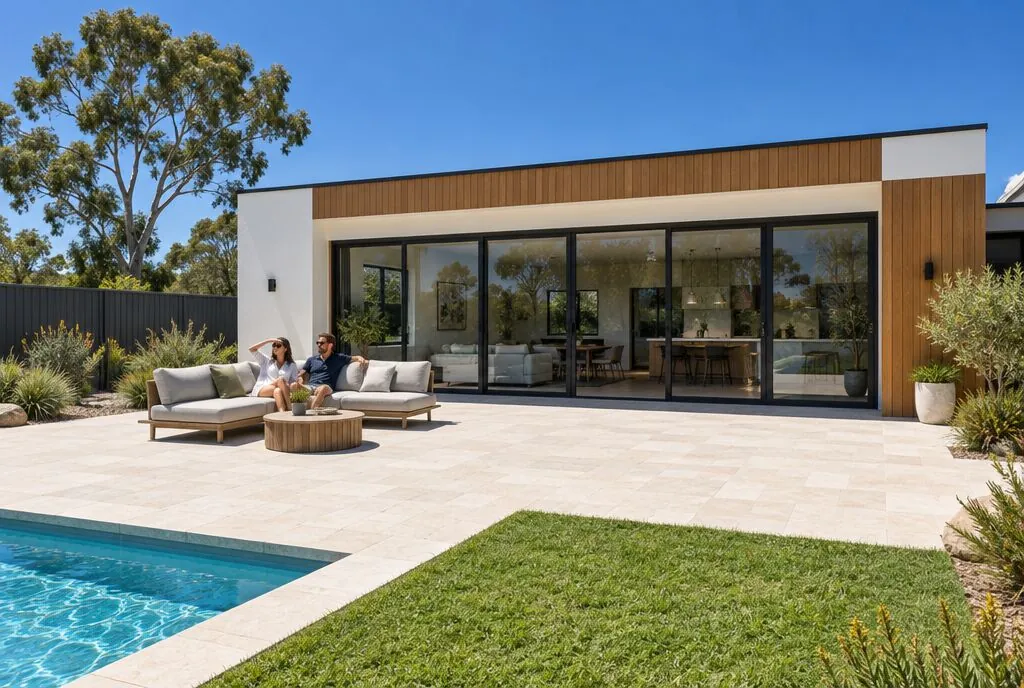
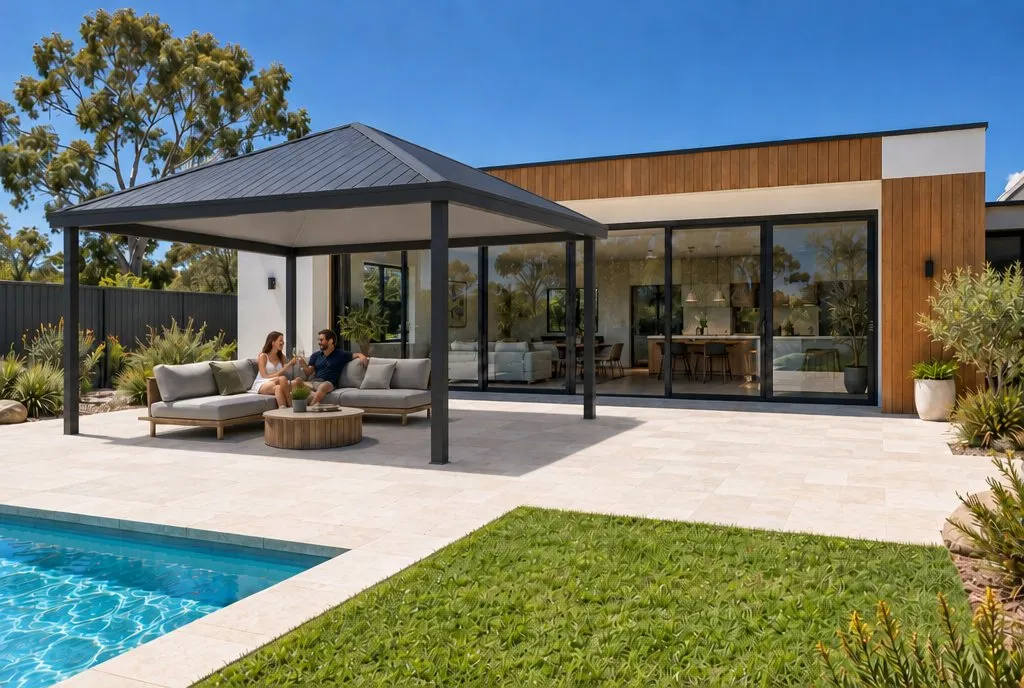 BeforePyramid Roof Pavilion
An outdoor pavilion is a freestanding roofed shelter that stands on its own posts, away from the house. Most have a pyramid or hip roof, which gives a resort feel over a pool, a garden lounge or an outdoor kitchen. It is the premium choice when you want a destination in the yard, not just shade off the back door.
BeforePyramid Roof PavilionWhat is an outdoor pavilion made of?
A pavilion has four or more posts, a perimeter beam, and a roof frame that rises to a peak. The frame is usually steel, aluminium or timber, or a mix.
The roof shape gives the style its name:
- Pyramid roof: four slopes meet at one central point. It suits square pavilions.
- Hip roof: four slopes meet at a short ridge. It suits rectangular pavilions.
The roof is usually COLORBOND steel sheet. Many owners line the underside for a finished ceiling, with exposed rafters for character.
Pavilion, gazebo or freestanding pergola?
People use these names loosely. As a rule of thumb:
- Pavilion: larger, solid roof, room for a dining or lounge setting.
- Gazebo: smaller, square or many sided, often a garden feature.
- Freestanding pergola: open roof of rafters or slats, shade only.
Footings and wind
A freestanding pavilion has no house wall to lean on. Every bit of its strength comes from the posts, the frame bracing and the footings.
That makes footings the most important part of the build. An engineer sizes them to your site's wind rating and soil. Sites get a wind classification: N ratings (such as N1 to N4) for non-cyclonic areas, and C ratings for cyclonic areas.
Expect concrete pad or bored footings at each post. Sloping ground, reactive clay or poor access can add cost. Get the footing design in writing with your quote.
Pros and cons of a pyramid roof pavilion
Pros:
- A standalone feature that becomes the focus of the garden.
- Can go anywhere: by the pool, at the bottom of the yard or on a deck.
- High peak gives airflow and room for a fan or pendant light.
- Does not block light to the house.
- Feels like an outdoor room without touching the home.
Cons:
- Costs more than an attached patio of the same size.
- Needs more posts and footings than an attached design.
- Power for lights and fans may need trenching.
- A tall peak is more likely to need council approval.
Who is an outdoor pavilion best for?
A pavilion suits larger blocks and owners who entertain often. It works best when there is a spot worth walking to: a pool, a view or a garden.
Good fits include:
- Pool areas that need a shaded lounge or cabana.
- Garden entertaining away from the house.
- Outdoor kitchens and bars with their own roof.
- Homes where attaching a patio is awkward or blocks windows.
Pavilions near a pool
Pool barrier rules apply to anything built near the fence. In Queensland, climbable objects must be at least 900 mm from the outside of the fence and 300 mm from the inside.
Built-in seats, barbecues, planters, steps and ledges can all count. Plan the pavilion and its furniture around that clear zone, and check the rules in your state.
How much does an outdoor pavilion cost?
These are our indicative installed prices for a Pyramid Roof Pavilion (freestanding), by size and state, including GST.
| Size | WA | SA | VIC | QLD | NSW | ACT | TAS | NT |
|---|---|---|---|---|---|---|---|---|
| 3 × 3 m | $13,000 to $15,500 | $13,000 to $15,500 | $14,000 to $16,000 | $14,000 to $16,500 | $15,000 to $17,500 | $15,000 to $17,500 | $14,500 to $17,000 | $15,500 to $18,500 |
| 5 × 4 m | $14,500 to $17,500 | $14,500 to $17,500 | $15,500 to $18,000 | $16,000 to $18,500 | $17,000 to $20,000 | $17,000 to $20,000 | $16,500 to $19,500 | $17,500 to $20,500 |
| 6 × 4.5 m | $20,000 to $23,500 | $20,000 to $23,500 | $21,000 to $24,500 | $21,500 to $25,000 | $23,000 to $27,000 | $23,000 to $27,000 | $22,500 to $26,000 | $24,000 to $28,000 |
Pyramid Roof Pavilion, indicative installed prices including GST, freestanding, rounded. Updated 28 October 2026.
Size, roof lining, footings, slab or decking, power and trenching, access and council fees move the price. These ranges are indicative only, and a site measure and written quote from an installer sets the real price. Our pergola cost guide has more detail.
Colours and options
The roof and frame can be any of the 22 core COLORBOND colours, or the six colour Matt range. Darker frames with a light ceiling are a popular pairing.
Popular options:
- A lined ceiling with a fan and pendant light.
- Outdoor blinds or curtains on the windy sides.
- A built-in bench, bar or outdoor kitchen.
- A polycarbonate or open lantern at the peak for light.
- A timber or composite deck as the floor.
For more layouts, browse our alfresco ideas.
Do you need council approval for a pavilion?
Usually, yes. A freestanding roofed structure is judged on size, height, distance to boundaries and site coverage. Pyramid and hip roofs can be tall at the peak.
Some small garden structures are exempt in some states, but a full pavilion often is not. Read our council approval guide for patios and pergolas before you sign.
Outdoor pavilion vs similar styles
Pavilion vs gable patio
A gable patio gives similar height and a pitched roof, but attaches to the house. It costs less and keeps you close to the kitchen.
Pavilion vs louvre roof pergola
A louvre roof pergola can also stand alone, with blades that open to the sky. It costs more, but gives sun or shade on demand.
Not sure whether to attach or stand alone? Read our attached vs freestanding patio guide. You can also see a pavilion in your own yard in about 30 seconds with our free tool.
Common questions
What is the difference between a pavilion, a gazebo and a freestanding pergola?
A pavilion is a freestanding structure with a solid roof, often large enough for a dining or lounge setting. A gazebo is usually smaller, square or many sided, with a pointed roof. A freestanding pergola has an open roof of rafters or slats.
Does a freestanding pavilion need special footings?
Yes. With no house wall to brace it, a pavilion relies on its own posts and footings to resist wind. An engineer sets the footing size from your wind rating and soil, and that design goes with the building approval.
Can you build a pavilion next to a pool?
Yes, but keep pool barrier rules in mind. In Queensland, climbable objects must stay at least 900 mm from the outside of a pool fence. Built-in seats, barbecues and planters inside that zone can make the fence non-compliant.
How much does an outdoor pavilion cost?
Our indicative installed price for a 6 m × 4.5 m pyramid roof pavilion is $20,000 to $23,500 in WA and $23,000 to $27,000 in NSW, including GST. Footings, roof lining, lighting, access and council fees move the final quote.
Is a hip roof pavilion the same as a pyramid roof?
They are close relatives. A pyramid roof has four slopes meeting at a single point, which suits square pavilions. A hip roof has four slopes meeting at a short ridge, which suits rectangular ones.
Keep reading
Sources
- Non-climbable zones | Queensland Building and Construction Commission
- Outback Pergola | STRATCO
- Outback Curved | STRATCO
- Colours | COLORBOND® steel
Prices on this page come from Backyard Mate's pricing for each state and are indicative only. Rules and products change: check with your council and installer before you build.