
Curved roof patio: dome roofs and bullnose verandahs explained (2026)
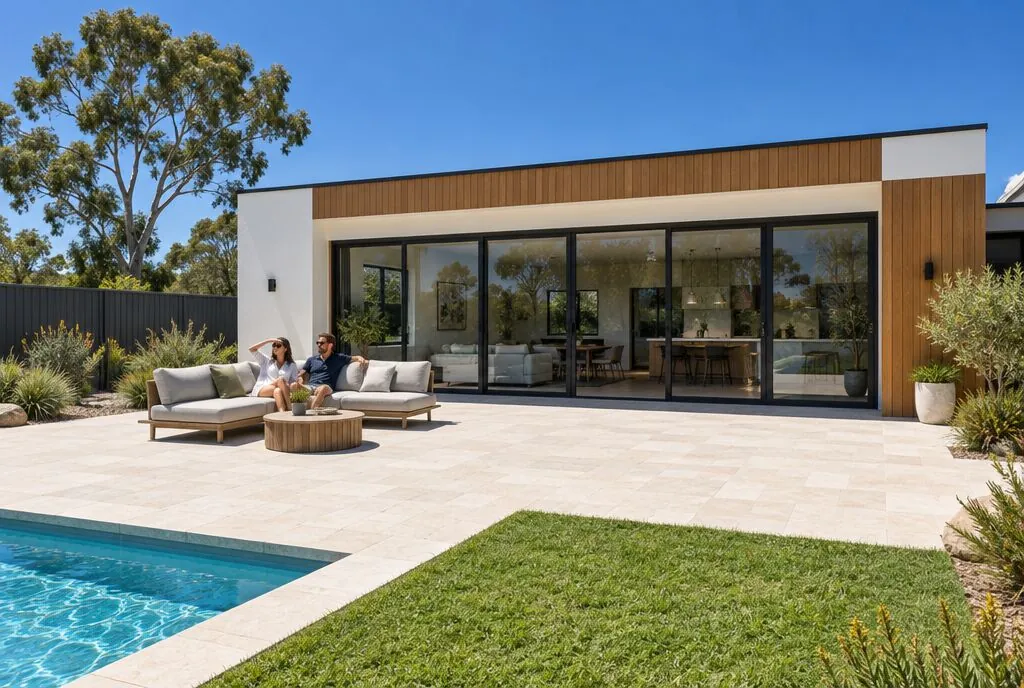
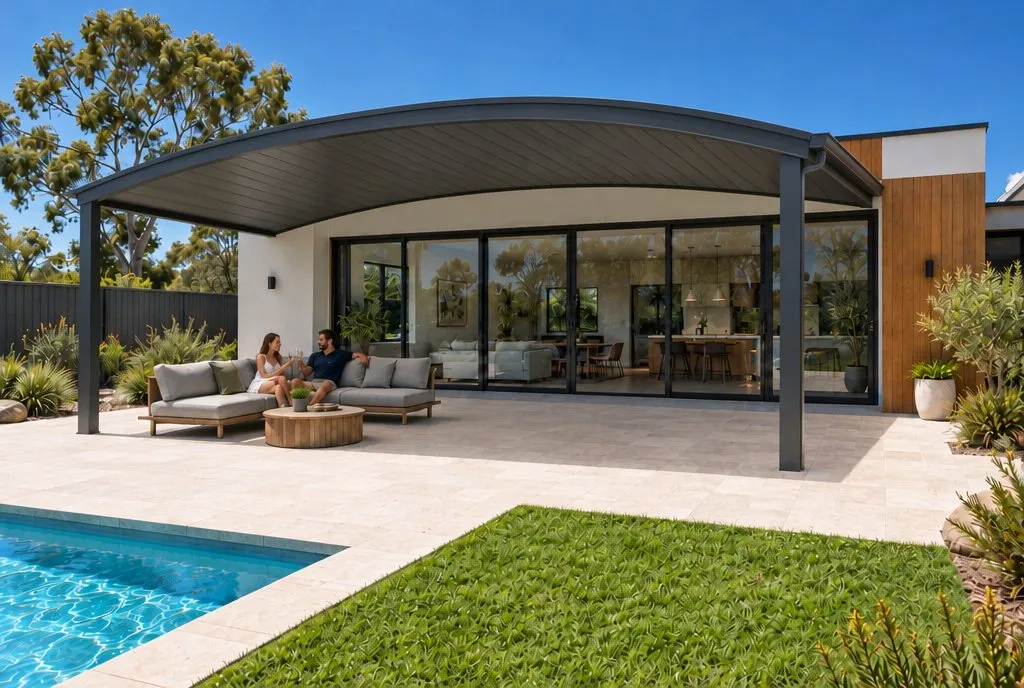 BeforeCurved Roof Patio
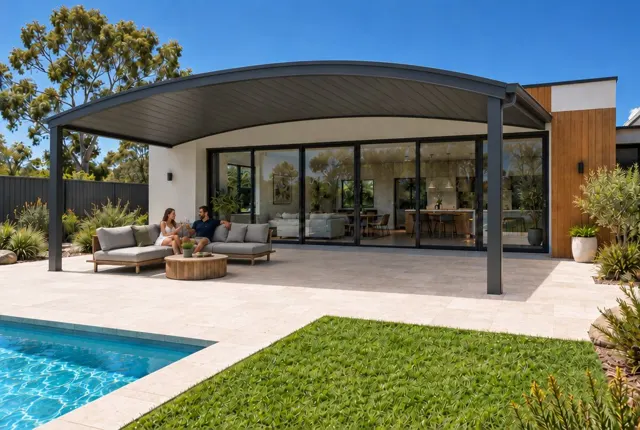
A curved roof patio has a roof that bends in a smooth arc instead of meeting at a flat or pitched line. It comes in two main shapes: a full dome over the whole span, or a bullnose verandah that curves down at the front. Both soften the look of a patio and suit heritage and coastal homes.
BeforeCurved Roof PatioWhat is a curved roof patio made of?
Most curved patios use a steel frame with curved rafters or beams that set the arc. The roof is usually corrugated steel, such as CUSTOM ORB, which Lysaght says can be installed flat or sprung curved.
For tighter curves, sheets are supplied pre-curved to the radius the design needs. One patio frame system notes its corrugated steel arrives pre-curved for easy installation, with curved spans up to 6.6 m wide.
There are two main shapes.
Dome roof patio
A dome roof patio arches from one side to the other, like a low barrel. It gives a soft, modern profile and more height in the middle than a flat roof.
Bullnose verandah
A bullnose verandah has a gently sloping roof that curves down at the front posts. Lysaght's construction guide uses a 400 mm radius curve in its main drawing, with larger radii also listed.
Lysaght says its CUSTOM BLUE ORB is more ductile than standard CUSTOM ORB, so it can be shaped into curves without damage.
Pros and cons of a curved roof patio
Pros:
- Soft, flowing look that stands out from boxy patios.
- Suits heritage homes and period reproductions.
- More height in the middle than a flat roof.
- Sheds rain and leaves easily off the curve.
Cons:
- Costs more than a flat or skillion roof.
- Curved sheets and rafters take more skill to build.
- Harder to fit insulated panels or a flat ceiling.
- Bullnose corners and flashings need careful detailing.
Who is a curved roof patio best for?
A bullnose verandah is the classic choice for older homes. Lysaght notes they were common on Victorian, Federation and Edwardian homes from the mid-1850s to the 1920s. They also suit new homes built in a period style.
A dome roof patio suits:
- Modern homes that want a softer line.
- Coastal houses with a relaxed, beachside feel.
- Carports and walkways, where the curve adds interest.
- Yards where a gable would feel too tall.
If you live in a heritage area, check council rules on roof shape, colour and materials early.
Curved roof patios near the coast
Salt air is hard on steel, so the grade matters. BlueScope's guidance for roofing is:
- COLORBOND steel: more than 200 m from breaking surf.
- COLORBOND Ultra steel: more than 100 m from breaking surf.
- SUPERDURA stainless steel: for very severe marine sites closer in.
Distances are measured from the high tide mark. Fixings and frames need the same care, so ask your installer what grade they quote.
How much does a curved roof patio cost?
These are our indicative installed prices for a Curved Roof Patio, by size and state, including GST.
| Size | WA | SA | VIC | QLD | NSW | ACT | TAS | NT |
|---|---|---|---|---|---|---|---|---|
| 3 × 3 m | $11,000 to $13,000 | $11,000 to $13,000 | $11,500 to $13,500 | $12,000 to $14,000 | $12,500 to $15,000 | $12,500 to $15,000 | $12,500 to $14,500 | $13,000 to $15,500 |
| 5 × 4 m | $11,000 to $13,000 | $11,000 to $13,000 | $11,500 to $13,500 | $12,000 to $14,000 | $12,500 to $15,000 | $12,500 to $15,000 | $12,500 to $14,500 | $13,000 to $15,500 |
| 6 × 4.5 m | $14,500 to $17,000 | $14,500 to $17,000 | $15,000 to $17,500 | $15,500 to $18,000 | $16,500 to $19,500 | $16,500 to $19,500 | $16,000 to $19,000 | $17,000 to $20,000 |
Curved Roof Patio, indicative installed prices including GST, attached, rounded. Updated 28 October 2026.
Size, the curve radius, height, coastal steel grades, footings, access and council fees move the price. These ranges are indicative only, and a site measure and written quote from an installer sets the real price. Our patio cost guide compares every style.
Colours and options
The roof and frame can be any of the 22 core COLORBOND colours. Lysaght lists COLORBOND, COLORBOND Ultra and unpainted ZINCALUME finishes for CUSTOM ORB.
Popular options:
- Classic heritage colours such as Manor Red, Cottage Green or Woodland Grey.
- Decorative lacework or brackets between posts on a bullnose.
- Clear polycarbonate on the curve to keep the light.
- Lighting along the front beam.
- Outdoor blinds on the weather side.
For help choosing, see our Colorbond colours guide.
Do you need council approval for a curved roof patio?
Often, yes. Size, height, boundary setbacks and bushfire rating are the usual triggers. Heritage areas can add rules on materials and colours.
Read our council approval guide for patios and pergolas before you sign anything.
Curved roof patio vs similar styles
Curved vs gable patio
A gable patio has two flat slopes meeting at a ridge. It gives more height and suits pitched house roofs. A curve is softer and often lower.
Curved vs flat roof patio
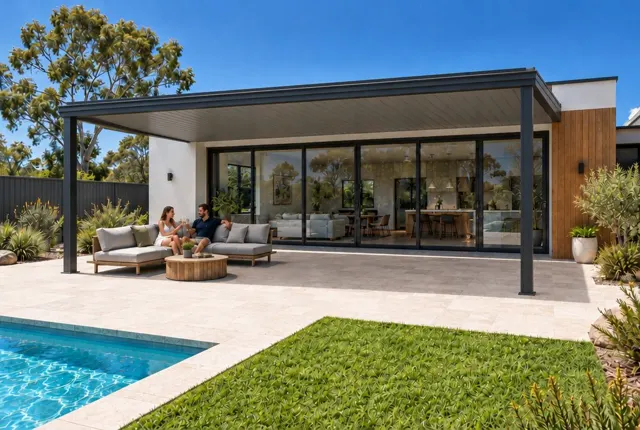
A flat roof patio is cheaper and quicker to build. A curve adds character for a moderate extra cost.
Weighing up a verandah look? Our verandah vs patio guide explains the difference. You can also see a curved roof on your own house in about 30 seconds with our free tool.
Common questions
What is the difference between a dome roof patio and a bullnose verandah?
A dome roof patio arches across its whole span, like a soft barrel. A bullnose verandah has a gently sloping roof that curves down only at the front edge. Bullnose verandahs are the traditional heritage style.
Do bullnose verandahs suit heritage homes?
Yes. Lysaght notes that bullnose verandahs were common on Victorian, Federation and Edwardian homes from the mid-1850s to the 1920s. If your home is in a heritage area, check council rules on materials and colours first.
Is a curved roof patio good near the coast?
It can be, if you pick the right steel. BlueScope recommends COLORBOND Ultra steel for roofing in severe marine areas and stainless steel for very severe ones, closest to breaking surf. Ask your installer to confirm the grade for your distance from the water.
How much does a curved roof patio cost?
Our indicative installed price for a 6 m × 4.5 m curved roof patio is $14,500 to $17,000 in WA and $16,500 to $19,500 in NSW, including GST. Coastal steel grades, height, footings and council fees move the final quote.
Keep reading
Sources
- Getting the details right on a bullnose verandah | Lysaght
- Bullnosed verandah construction guide using CUSTOM BLUE ORB® (Lysaght)
- CUSTOM ORB® | Lysaght.com
- Specifying for marine and industrial environments (updated) | STEEL SELECT®
- Outback Curved | STRATCO
Prices on this page come from Backyard Mate's pricing for each state and are indicative only. Rules and products change: check with your council and installer before you build.