
Best patio roof for hot climates: Perth, Brisbane, Adelaide and Darwin (2026)
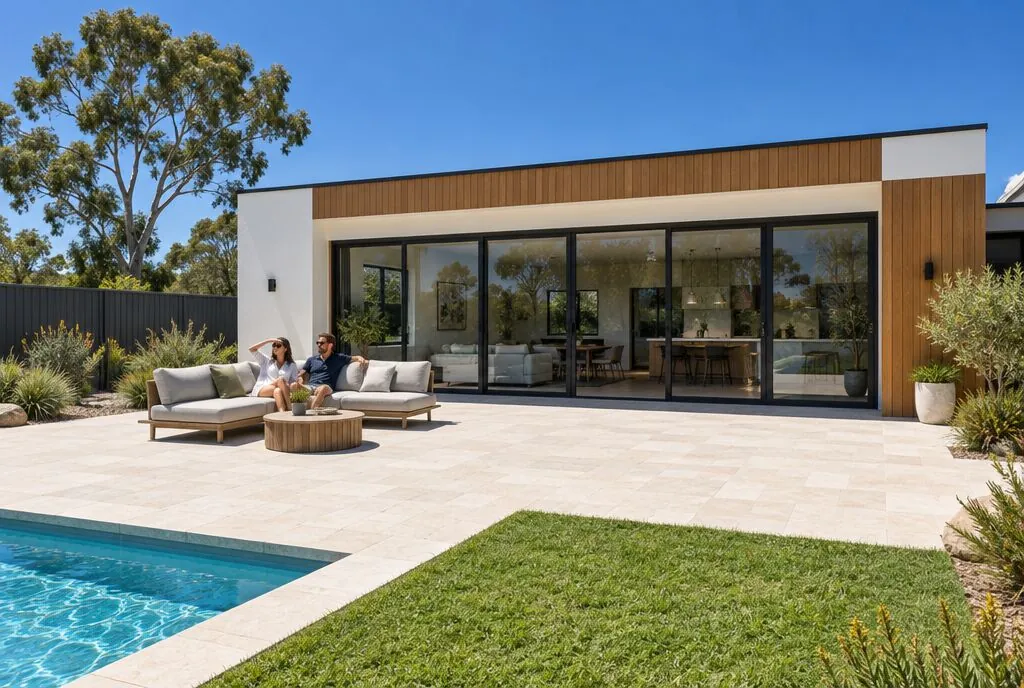
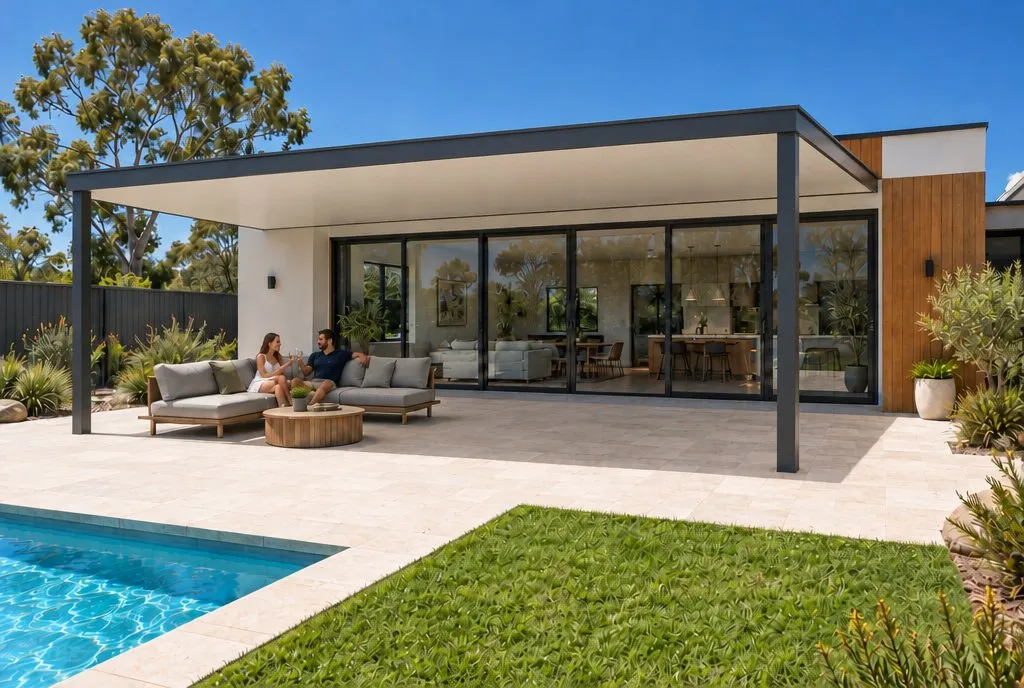 BeforeInsulated Roof Patio
The best patio roof for a hot climate is an insulated roof in a light colour. Add enough height for air to move, and a ceiling fan. A light Colorbond sheet roof is the budget option, polycarbonate lets the most heat through, and an adjustable louvre roof gives the most control.
What suits you depends on the kind of heat you live with. Dry heat in Perth and Adelaide calls for blocking the sun, while humid heat in Brisbane and Darwin calls for airflow as well.
How hot do Australian cities get?
Bureau of Meteorology long term averages show why the roof matters so much:
| City (BoM station) | Hottest month mean maximum | Days a year at 35 °C or more | Worth knowing |
|---|---|---|---|
| Perth Metro | 31.7 °C (February) | 27.0 | 4.2 days a year at 40 °C or more |
| Adelaide (West Terrace) | 28.7 °C (January) | 17.0 | Record of 46.6 °C in January 2019 |
| Brisbane | 30.4 °C (January) | 3.9 | 74.8 days a year at 30 °C or more |
| Darwin Airport | 33.4 °C (October and November) | 13.7 | 321 days a year at 30 °C or more |
Perth and Adelaide have fewer warm days but sharper heatwaves. Brisbane and Darwin rarely spike as high, but stay warm and sticky for months. In Darwin, January humidity averages 70 per cent at 3 pm.
Patio roof types compared for heat
Here is how the main roof types handle a hot summer. Prices are our indicative installed figures for a 6 × 4.5 m patio in WA.
| Roof type | Heat underneath | Light underneath | Indicative price (WA) |
|---|---|---|---|
| Insulated roof | Coolest fixed roof | Shaded, ceiling finish | $15,000 to $17,500 |
| Flat Colorbond | Warm, much better in a light colour | Shaded | $11,500 to $13,500 |
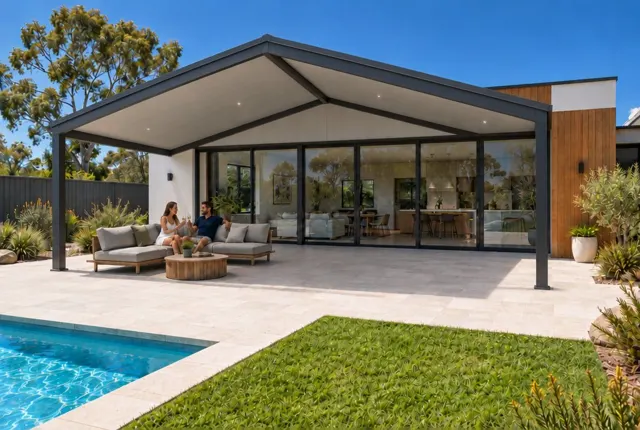
| Gable roof | Cooler than flat, thanks to height | Bright under the gable | $16,000 to $18,500 |
| Polycarbonate | Warmest | Bright | $10,500 to $12,500 |
| Adjustable louvre | You choose: open or closed | You choose | $28,000 to $33,000 |
Prices are indicative, include GST and change by state. A site measure and written quote sets the real figure.
Insulated roof panels
An insulated panel has steel skins with an insulating core between them. The sun heats the top skin, but far less of that heat reaches the ceiling below.
That makes insulated roofs the first choice for patios joined to living areas, especially facing north or west. The finished ceiling also hides cables for lights and fans.
Single skin Colorbond
A plain Colorbond sheet gives full shade and keeps rain out, but a single sheet of steel warms up fast. On a still afternoon, you can feel the heat coming down from it.
Colour makes a big difference here, so a light roof is the minimum in a hot climate. More on that below.
Polycarbonate
Polycarbonate is popular because it keeps the area bright and the house behind it less gloomy. The trade-off is heat: sunlight passing through brings warmth with it.
It works best on east facing patios, over walkways, or in milder climates. Our guide to polycarbonate vs Colorbond compares them in detail.
Adjustable louvre roof
Louvre blades close for shade and rain, then open to let trapped hot air rise out. On a summer evening, opening the blades can make the space feel much cooler.
It is the most expensive option, so it suits people who want one space for every season. See our louvre roof cost guide.
Roof colour matters as much as material
A dark roof absorbs much more of the sun's energy. Colorbond publishes the solar absorptance of each colour: Surfmist is 0.33, Monument is 0.73 and Night Sky is 0.95. Lower numbers mean a cooler roof.
BlueScope's Thermatech technology reflects more of the invisible near-infrared part of sunlight. It is on 21 core Colorbond colours and all six Matt colours, but not Night Sky.
Research backs this up for houses. Researchers from UNSW and Western Sydney University, writing for CSIRO's Australian Housing Data site, say cool roofs markedly cut home cooling energy. They also note that light and dark roofs cost the same to build.
BlueScope reports a UNSW finding that in mainland capital cities, cooling savings from cool roofs outweigh any small heating penalty in winter. Our guide to Colorbond colours for a patio helps you pick one that suits your house.
BeforeInsulated Roof PatioHeight and cross ventilation
Hot air rises and gets trapped under a low, flat roof. Giving it somewhere to go is one of the cheapest ways to cool a patio.
- Go higher. A raised roof, a raised skillion or a gable lets hot air collect above head height.
- Leave sides open. Each wall or closed blind cuts the breeze. Use mesh blinds rather than solid ones on hot sides.
- Face the breeze. If your area gets a regular afternoon breeze, keep that side open.
- Shade the west. Low afternoon sun gets under any roof. A mesh blind on the west side helps more than a darker roof.
- Avoid trapping heat against the house. A gap between the patio roof and the house roof lets warm air escape.
Add a ceiling fan
In humid places, moving air matters as much as shade. A ceiling fan makes a 30 °C evening in Brisbane far more comfortable, and it costs much less than a bigger roof.
Choose a fan rated for outdoor use, and have a licensed electrician install it. Insulated roofs make fitting easy, and the extra height of a gable gives the blades more room. Our patio extras cost guide lists typical prices.
Best patio roof by city
- Perth and Adelaide: an insulated roof in a light colour, with a mesh blind on the west side. See our Perth patios page for local prices.
- Brisbane and the Gold Coast: an insulated or gable roof with a ceiling fan for humid nights. A 6 × 4.5 m gable patio in Queensland is about $17,000 to $20,000.
- Darwin: height, open sides and fans come first. Darwin Airport averages 1,732 mm of rain a year, so gutters and downpipes need to cope with heavy storms.
Not sure how an insulated or gable roof will look on your home? Backyard Mate shows it on a photo of your own house in about 30 seconds, with an indicative price for your state.
Common questions
What is the coolest type of patio roof?
An insulated roof panel in a light colour is usually the coolest fixed patio roof, because the insulated core stops most of the sun's heat reaching you. An adjustable louvre roof can feel cooler still on breezy evenings, because you can open it to let hot air escape.
Is a polycarbonate patio roof too hot for Perth?
It can be. Polycarbonate lets light through, and with it some of the sun's heat, so the space underneath warms up on a 35 °C day. Perth Metro averages 27 days a year at 35 °C or more, so most Perth homeowners choose insulated or light coloured steel for main living areas.
What colour patio roof is coolest?
The lightest colours. On Colorbond's published figures, Surfmist absorbs 0.33 of the sun's radiation, Monument 0.73 and Night Sky 0.95. A lower number means a cooler roof on hot days.
Do ceiling fans help on a patio?
Yes, especially in humid places like Brisbane and Darwin, where moving air matters more than shade alone. Choose a fan rated for outdoor use and have it installed by a licensed electrician.
Is an insulated patio worth it in Brisbane?
For most covered living areas, yes. Brisbane averages about 75 days a year at 30 °C or more, so a roof that blocks heat earns its keep. A 6 × 4.5 m insulated patio in Queensland is about $16,000 to $19,000, against about $12,500 to $15,000 for a flat Colorbond roof.
Keep reading
Sources
- Summary statistics PERTH METRO | Bureau of Meteorology
- Summary statistics ADELAIDE (WEST TERRACE / NGAYIRDAPIRA) | Bureau of Meteorology
- Summary statistics BRISBANE | Bureau of Meteorology
- Summary statistics DARWIN AIRPORT | Bureau of Meteorology
- If you've got a dark roof, you're spending almost $700 extra a year to keep your house cool | Australian Housing Data (CSIRO)
- Cool roofing: A smarter choice for energy efficiency and urban heat reduction | BlueScope
- Environment | Why COLORBOND steel
- Surfmist | COLORBOND steel
- Monument | COLORBOND steel
- Night Sky | COLORBOND steel
Prices on this page come from Backyard Mate's pricing for each state and are indicative only. Rules and products change: check with your council and installer before you build.