
Insulated patio cost in Australia: 2026 prices and is it worth it?
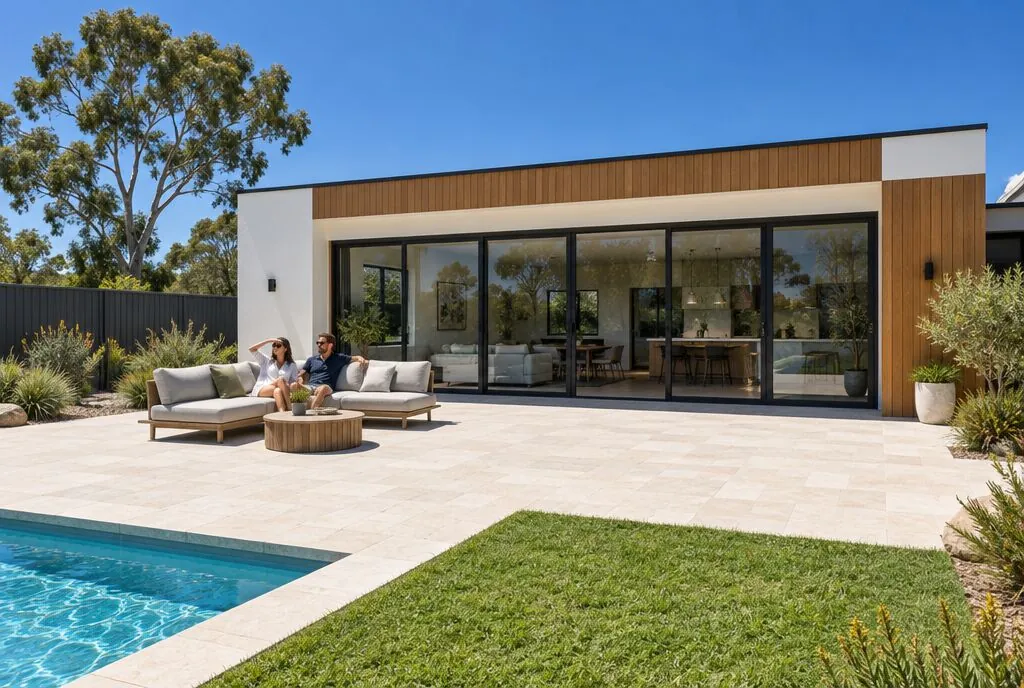
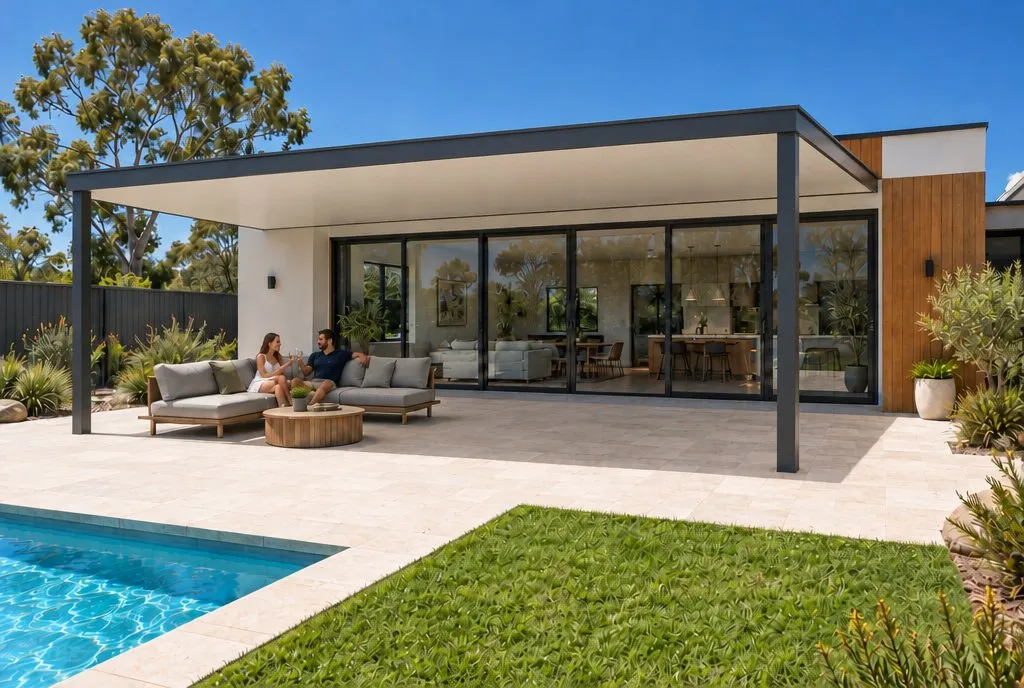 BeforeInsulated Roof Patio
An insulated patio costs about $15,000 to $17,500 for a 6 × 4.5 m attached patio in WA or SA, rising to about $17,000 to $20,000 in NSW and the ACT. That is usually a few thousand dollars more than a plain flat Colorbond roof of the same size, which is about $11,500 to $13,500 in WA.
Prices here are indicative, installed and include GST. The panel thickness, the roof shape and your site all change the final figure.
Insulated patio cost by size and state
The table shows our indicative installed prices for an insulated roof patio in three sizes: small (3 × 3 m), medium (5 × 4 m) and large (6 × 4.5 m).
| Size | WA | SA | VIC | QLD | NSW | ACT | TAS | NT |
|---|---|---|---|---|---|---|---|---|
| 3 × 3 m | $11,500 to $13,500 | $11,500 to $13,500 | $12,000 to $14,000 | $12,500 to $14,500 | $13,000 to $15,500 | $13,000 to $15,500 | $13,000 to $15,000 | $14,000 to $16,000 |
| 5 × 4 m | $11,500 to $13,500 | $11,500 to $13,500 | $12,000 to $14,000 | $12,500 to $14,500 | $13,000 to $15,500 | $13,000 to $15,500 | $13,000 to $15,000 | $14,000 to $16,000 |
| 6 × 4.5 m | $15,000 to $17,500 | $15,000 to $17,500 | $15,500 to $18,500 | $16,000 to $19,000 | $17,000 to $20,000 | $17,000 to $20,000 | $16,500 to $19,500 | $18,000 to $21,000 |
Insulated Roof Patio, indicative installed prices including GST, attached, rounded. Updated 28 October 2026.
For a 27 m² patio, that works out to roughly $540 to $740 per square metre, depending on the state. Smaller patios usually cost more per square metre, because setup and the connection to the house cost much the same at any size.
What is an insulated patio roof?
An insulated patio roof is made from sandwich panels rather than single sheets of steel. Each panel has a steel roof skin on top, an insulating core in the middle and a pre-painted steel ceiling underneath.
Take one widely used Australian panel, Bondor SolarSpan, as an example. It has a Colorbond steel top, a fire-retardant expanded polystyrene (EPS-FR) core and a pre-painted Colorbond steel ceiling with a plain or VJ (V-groove) finish.
Core materials
The Queensland Building and Construction Commission says insulated roof panels usually have a core of one of three materials:
- EPS-FR: fire-retardant expanded polystyrene, the core used in SolarSpan.
- PIR: polyisocyanurate foam.
- Mineral wool: a fibre core rather than a foam.
Panel thickness and R-values
Thicker panels insulate better and cost more. SolarSpan is made in core thicknesses from 50 mm to 200 mm. Here are the published R-values for the three thinnest options:
| Core thickness | Total R-value |
|---|---|
| 50 mm | R1.40 |
| 75 mm | R2.03 |
| 100 mm | R2.65 |
These figures are measured at an average insulation temperature of 15°C, and other brands publish their own. The higher the R-value, the more the panel resists heat moving through it.
Thicker panels are also stiffer, so they can often span further between beams. Ask your installer which thickness suits your span and wind rating.
BeforeInsulated Roof PatioIs an insulated patio worth it?
For many Australian homes, yes. A single sheet of steel heats up in the sun and radiates that heat down onto you. An insulated panel puts a thick layer of insulation between the hot roof and the space underneath.
We do not quote a "degrees cooler" figure, because it depends on the panel, the orientation, the colour and the weather on the day. What the R-value tells you is how well the panel resists heat flow, and you can compare that across quotes.
An insulated roof is usually worth the extra when:
- Your patio faces west or north and gets strong afternoon sun.
- You live somewhere hot, such as Perth, Brisbane or the NT. See our guide to the best patio roof for a hot climate.
- The patio is attached to a living area and you want to keep heat off the windows.
- You want a finished ceiling for downlights and a fan, without exposed purlins.
It may be less important when:
- The patio is small and mainly covers a barbecue or a walkway.
- It sits in shade for most of the day.
- Budget is tight, and you would rather spend on size or blinds.
Our insulated vs non-insulated patio guide compares the two in more detail.
What changes the price of an insulated patio?
- Panel thickness: a 100 mm panel costs more than 50 mm.
- Roof shape: a flat insulated roof is the cheapest. An insulated gable roof costs more again.
- Size and span: longer spans may need a thicker panel or an extra beam.
- Height: connecting above the gutter or to a double-storey house adds steel and labour.
- Ceiling finish and colour: a VJ ceiling or a special colour can change the price.
- Lights and fans: in Queensland, the Electrical Safety Office says DIY electrical work is illegal, so allow for a licensed electrician.
Insulated patios in bushfire areas
If your home is in a bushfire prone area, check this early. The QBCC notes that the bushfire standard (AS 3959:2018) requires roof coverings to be non-combustible at every Bushfire Attack Level (BAL). Laminated panels cannot be classed as non-combustible under the usual test, so the alternative is a system tested for the relevant BAL.
In practice, ask the installer for written evidence that the exact panel suits your BAL rating. Your certifier or council can confirm it.
How to get an exact insulated patio price
Ask for a site measure and a written quote that names the panel brand, core material, thickness and R-value. Ask for a second price at another thickness so you can see the difference. Then compare quotes line by line, including footings, approvals and electrical work.
Want to see how an insulated roof looks on your house before anyone visits? Backyard Mate shows it on your own photo in about 30 seconds, with an indicative price for your state. Prefer a different look for your verandah or alfresco area? Browse more patio styles.
Common questions
How much does an insulated patio cost?
A 6 × 4.5 m insulated roof patio is about $15,000 to $17,500 installed in WA and SA, about $15,500 to $18,500 in Victoria and about $17,000 to $20,000 in NSW. These are indicative ranges including GST.
How much more is an insulated patio than a normal Colorbond patio?
In WA, a 6 × 4.5 m insulated patio is about $15,000 to $17,500, against $11,500 to $13,500 for a flat Colorbond roof of the same size. The gap is usually a few thousand dollars.
What thickness of insulated panel should I choose for a patio?
Panels are made in thicknesses from 50 mm up to 200 mm. Thicker panels have a higher R-value and cost more, so the right choice depends on your climate, the span and your budget. Ask your installer to quote two thicknesses.
Can you put downlights and fans in an insulated patio roof?
Lights and fans can be added to an insulated patio. Ask your installer how they fix them to the panel you choose, have a licensed electrician do the wiring, and plan it before the roof goes on.
Keep reading
Sources
- SolarSpan® by Bondor® | Australian Institute of Architects
- SolarSpan | Bondor | Steelselect
- Insulated Roof Panels: Bushfire Attack Level and Non-Conforming Building Products | QBCC
- Don't do your own electrical work | Electrical Safety Office Queensland
Prices on this page come from Backyard Mate's pricing for each state and are indicative only. Rules and products change: check with your council and installer before you build.